
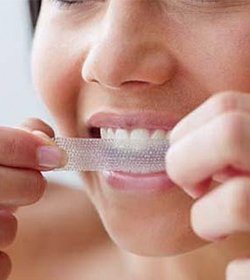
A dazzling smile for holiday photos is at the top of our seasonal wish lists, but before you reach for at-home tooth whitening kits, read these careful considerations for safely whitening your smile.
Dr. Leslie Renee Townsend, DDS. of Jefferson Dental Clinics breaks down the FAQ’s many patients have about using at-home whitening kits.
Q1: Do whitening strips really work? How?
A: “According to the ADA most whitening strips, both over-the-counter and those purchased from dentists, are generally effective and safe,” says Dr. Townsend. “However, results and any resultant complications may vary on a case-by-case basis.”
Tooth whitening products are made from flexible plastic coated with a gel made from hydrogen peroxide or carbamide peroxide in about a 10% concentration. When applied, the gel reacts with moisture in the mouth and oxidizes to get into the enamel.
Q2: Can the chemicals in whitening strips damage your teeth or gums?
A: They can.
The chemicals in whitening products have the possibility of exacerbating existing problems with the teeth and gums, such as periodontitis (80% of Americans suffer from some level of gum disease) or open caries.
In small concentrations, the chemicals are thought to be generally safe for those with good oral health. Dr. Townsend stresses the importance of dental consultation, including a professional exam and x-rays, to determine the state of your oral health prior to starting any at-home treatment.
Q3: What are other complications that whitening products can cause?
A: The chemicals do have the possibility of causing gum irritation, sensitivity or tooth pain. Additionally, crowns and bridges made of porcelain or ceramic do not react to the chemicals, so their color may not perfectly match whitened teeth. The gel or liquid from whitening products can also seep into the porous tooth structure and under crowns, causing increased sensitivity.
Q4: Can you over do at-home whitening strips? As in wear them for too long, overnight, not pace usage?
A: Overuse of whitening strips or incorrect application can definitely cause extreme sensitivity and/or soreness in the teeth. The teeth can become porous or the enamel and gums can weaken and break down.
Q5. What are dentist recommendations on proceeding with an at-home whitening plan?
Always consult with your dentist prior to beginning at-home whitening treatments. Dr. Townsend recommends brushing with a toothpaste for sensitivity, that does not contain a whitening component, concurrently with the use of whitening products to help counter increased tooth sensitivity.
Most importantly, follow instructions concerning application and time limits carefully, and follow up with your dentist if problems arise. Discontinue use of at-home products if you feel pain or begin developing an infection.